
Jun 11, 2026 | Meet RISK-HUNT3R
The European Commission has published its Roadmap towards Phasing Out Animal Testing for Chemical Safety Assessments, marking an important milestone in the transition towards animal-free, human-relevant approaches for assessing chemical safety.
https://single-market-economy.ec.europa.eu/publications/roadmap-towards-phasing-out-animal-testing-chemical-safety-assessments_en
Developed in response to the European Citizens’ Initiative “Save Cruelty-Free Cosmetics”, the roadmap outlines a long-term strategy for replacing animal testing while maintaining a high level of protection for human health and the environment. It proposes actions spanning research and innovation, regulatory implementation, stakeholder engagement and international collaboration.
For RISK-HUNT3R, the publication of the roadmap is particularly significant. Many of the scientific concepts explored within the project are reflected throughout the roadmap and its supporting analysis, including the transition towards Next-Generation Risk Assessment (NGRA), the use of mechanistic evidence, and the development of structured frameworks for integrating information from non-animal methods.
The roadmap’s supporting analysis also highlights the Alternative Safety Profiling Algorithm (ASPA), developed within RISK-HUNT3R as part of the ASPIS cluster, as a structured NGRA framework. It further states that frameworks such as ASPA are “an indispensable prerequisite” for further work on the roadmap, helping to clarify how future legislative and guidance developments could support the transition towards animal-free safety assessment.
Over the past years, RISK-HUNT3R and the wider ASPIS cluster have actively contributed to the scientific and regulatory dialogue surrounding the roadmap, including through ASPIS satellite meetings organised alongside the European Commission’s roadmap workshops.
As the roadmap moves into the implementation phase, the project’s results, tools and frameworks provide an important contribution to the transition towards animal-free chemical safety assessment.

Dec 19, 2025 | Meet RISK-HUNT3R
On 26-27 January, RISK-HUNT3R organises a training on building next-generation risk assessment (NGRA) case studies using the Alternative Safety Profiling Algorithm (ASPA).
If you are working on, or are interested in, NGRA case studies and the practical use of ASPA, we would be glad to welcome you for two days of hands-on training, concrete examples, and exchange with peers.
When: Monday–Tuesday, 26–27 January 2026
Where: Hotel Zuiderduin (Egmond aan Zee, The Netherlands)
Venue details and hotel booking: https://www.zuiderduin.nl/en/packages/package/560/RISK-HUNT3R
Objective
The objective of this training is to learn how to put together a complete NGRA case study, with a strong practical focus on the use of ASPA—specifically, how individual building blocks are combined into a coherent NGRA case study and captured in the ASPA-assist dashboard.
Key topics
- Building blocks of the three ASPA pillars
- Necessary and potential links to other pillars
- Which NAMs can be used to assess/predict relevant parameters
- Practical examples of how to capture and document the building blocks in ASPA-assist
Links
- Full training programme
- To register for the meeting, please complete the online registration form: HERE
- To book your hotel room + Day Packages, please click HERE.
- Deadline: Mon, 05 Jan 2026
Dec 18, 2025 | Meet RISK-HUNT3R
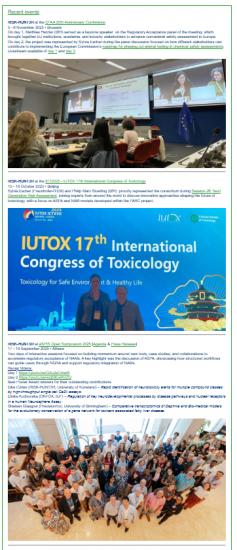
To end 2025, we have published a bulletin that reviews the dissemination activities carried out by RISK-HUNT3R partners in 2025. Enjoy the read and happy holidays!
Nov 14, 2025 | Meet RISK-HUNT3R, News
The first scientific publication introducing the Alternative Safety Profiling Algorithm (ASPA) has been released in ALTEX (October 2025)!
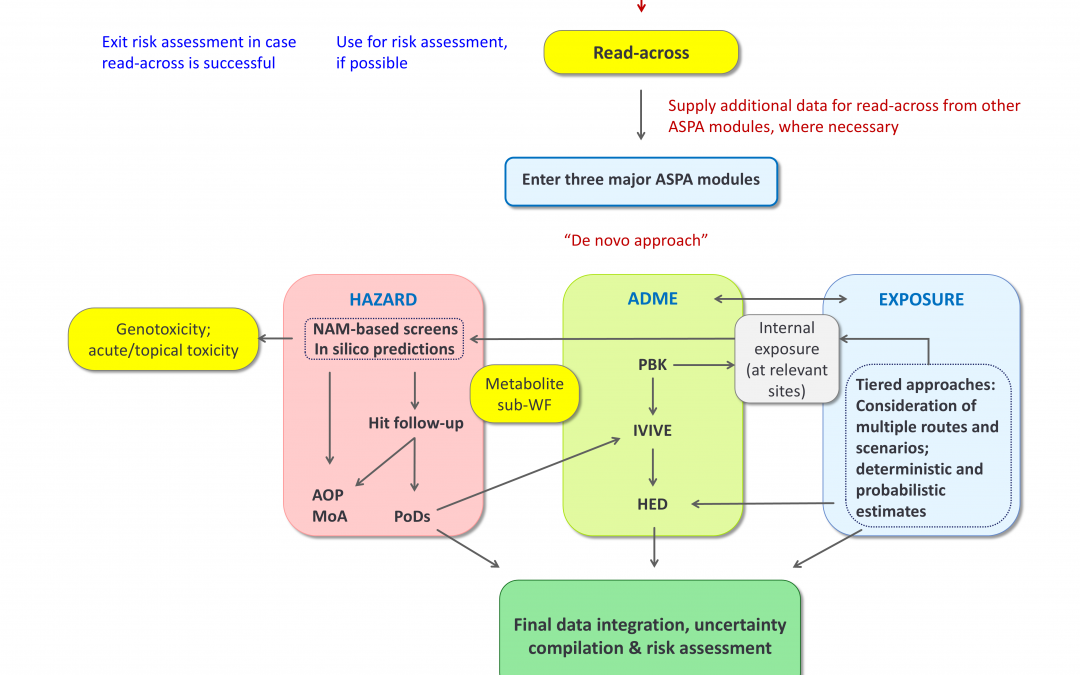
“An Alternative Safety Profiling Algorithm (ASPA) to Transform Next Generation Risk Assessment into a Structured and Transparent Process” presents a broad-purpose, transparent and reproducible risk assessment workflow, designed to make Next Generation Risk Assessment (NGRA) more structured, traceable and applicable in regulatory contexts.
Developed through collaboration within the ASPIS cluster (RISK-HUNT3R, ONTOX, and PrecisionTox), ASPA integrates data on hazard, ADME, and exposure, and is supported by a user-friendly software, ASPA-assist.
This publication marks an important milestone in advancing animal-free, data-driven approaches to chemical safety assessment, and a big step towards the practical implementation of NGRA.
Leist M, Tangianu S, Affourtit F, Braakhuis H, Colbourne J, Cöllen E, Dreser N, Escher SE, Gardner I, Hahn S, Hardy B, Herzler M, Islam B, Kamp H, Magel V, Marx-Stoelting P, Moné MJ, Lundquist P, Ottenbros I, Ouedraogo G, Pallocca G, van de Water B, Vinken M, White A, Pastor M, Luijten M. An Alternative Safety Profiling Algorithm (ASPA) to transform next generation risk assessment into a structured and transparent process. ALTEX. 2025 Oct 16. doi: 10.14573/altex.2509081. Epub ahead of print. PMID: 41099509. https://www.altex.org/index.php/altex/article/view/3041
Sep 24, 2025 | Meet RISK-HUNT3R, News
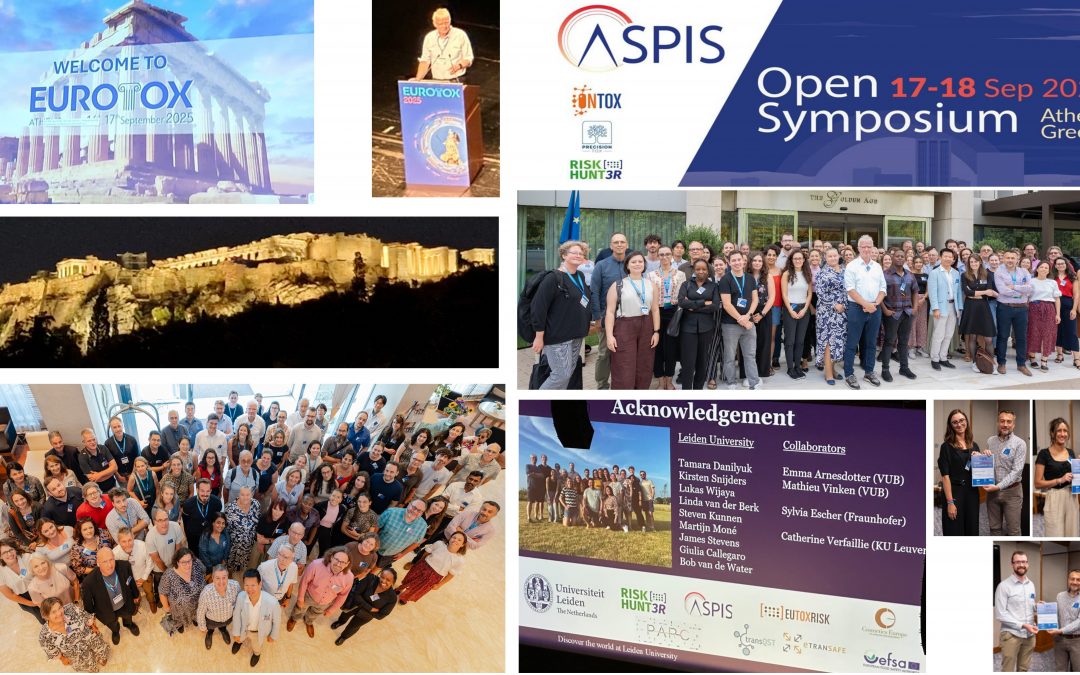
Last week marked an inspiring milestone for the ASPIS cluster, with two major events taking place back-to-back: EUROTOX 2025 and the ASPIS Open Symposium. Together, they brought scientists, regulators, and industry representatives into one space to share progress, strengthen collaboration, and discuss the future of New Approach Methodologies (NAMs) in regulatory science.
EUROTOX 2025: Bringing science closer to regulatory use
At EUROTOX, RISK-HUNT3R and ASPIS partners showcased advances in NAMs and their role in shaping the future of risk assessment.
• A dedicated session on assessing and communicating uncertainty in Next Generation Risk Assessment (NGRA) sparked valuable discussion on how to make emerging methods more transparent, reliable, and regulatory-ready.
• Another session on advanced human liver test systems highlighted how cutting-edge in vitro models can improve drug and chemical safety evaluation while reducing reliance on animal testing.
These sessions underlined both the scientific potential and the ethical importance of transitioning to modern testing strategies.
ASPIS Open Symposium
Following EUROTOX, the ASPIS Open Symposium brought together RISK-HUNT3R, PrecisionTox, and ONTOX for two days of interactive sessions. Here, the focus was on building momentum around new tools, case studies, and collaborative initiatives to accelerate the regulatory uptake of NAMs.
A particular highlight was the discussion on ASPA, the interactive workflow developed within RISK-HUNT3R to operationalize NGRA, as a key example of how structured workflows can guide users through the NGRA process and support regulatory integration.
Best Poster Award winners for their outstanding contributions:
Eliska Kuchovska (ONTOX; IUF – Leibniz Research Institute for Environmental Medicine) – Regulation of key neurodevelopmental processes by disease pathways and nuclear receptors in a human Neurosphere Assay
Shaleen Glasgow (PrecisionTox; University of Birmingham) – Comparative transcriptomics of Daphnia and Bio-medical models for the evolutionary conservation of a gene network for toxicant associated fatty liver disease
Eike Cöllen (RISK-HUNT3R; University of Konstanz) – Rapid identification of neurotoxicity alerts for multiple compound classes by high-throughput single cell Ca2+ assays
By joining forces, ASPIS projects are moving NAMs from the research bench into regulatory practice, shaping a system that is more reliable, more human-relevant, and less dependent on animal testing.
First ASPA Paper Submitted!
Great news: the very first paper on the ASPA workflow has just been submitted. This is a big milestone for the project and for advancing NGRA in practice.
While under review, you can already explore the preprint here: https://zenodo.org/records/16993943

Sep 16, 2025 | Meet RISK-HUNT3R
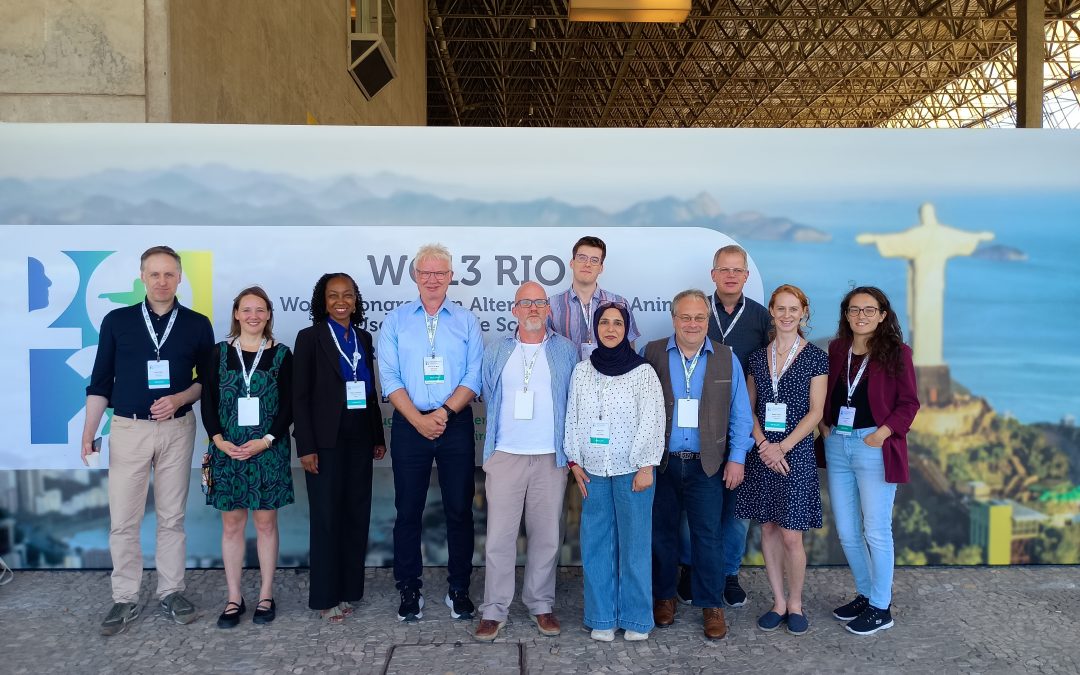
The 13th World Congress on Alternatives and Animal Use in the Life Sciences brought us to Rio de Janeiro, and what an inspiring week it was! 🌍✨
Together with our ASPIS cluster colleagues from ONTOX and PrecisionTox, the RISK-HUNT3R delegation joined hundreds of scientists, regulators and innovators from around the world to exchange ideas and showcase the latest in next-generation safety testing.
Our contributions highlighted new ways to make safety testing less reliant on animal studies, from exploring how Physiologically Based Kinetic (PBK) models can improve toxicokinetics assessment, to shining a spotlight on ASPA.
ASPA is an interactive NGRA workflow that systematically guides users through the entire risk assessment process. By bringing structure and clarity to this complex challenge, ASPA makes it easier to turn innovative science into practical, usable tools that can support real-world decision-making.
While not everyone from the project could join us in Rio, the delegation represented the energy, creativity and progress of the wider consortium. Our colleagues shared posters, co-chaired sessions and joined inspiring discussions on AI, NAMs and sustainable innovation. Every conversation, from the plenary stage to the coffee breaks, reinforced the sense of a community working together for a common goal: advancing human-relevant approaches that support the 3Rs and pave the way to a future without animal testing.
We return from WC13 motivated by the steps forward we’ve made together and grateful for the chance to connect with so many brilliant colleagues around the world.
Here’s to keeping the momentum going, and to building the next chapter of innovative, human-relevant chemical safety science! 🙌